
Back to Blogs

The Best Detailing Business Models for 2026
The auto detailing industry continues to evolve as customer expectations, technology, and operating costs change. In 2026, successful detailing businesses will be defined by flexibility, efficiency, and predictable revenue. Detailers who adopt the right business model will be better positioned to scale, manage risk, and build long-term customer relationships. This article outlines the most effective detailing business models for 2026 and why they work.
1. Mobile Detailing with Scheduled Rebooking
Mobile detailing remains one of the strongest business models in 2026 due to low overhead and growing demand for convenience. Customers increasingly prefer services that come to their home or workplace, and mobile detailers can operate without the costs of a fixed location.
The most successful mobile detailers focus on scheduled rebooking rather than one-time jobs. Monthly or bi-monthly maintenance plans create predictable income, reduce marketing costs, and increase customer lifetime value. This model works best when paired with automated scheduling, consistent service quality, and clear communication.

2. Subscription-Based Detailing Services
Subscription detailing continues to gain traction as customers seek simplicity and consistency. Instead of booking individual services, customers pay a recurring monthly fee for ongoing vehicle care.
For detailers, subscriptions provide steady cash flow and make it easier to plan routes and staffing. In 2026, this model succeeds when services are clearly defined, usage limits are communicated upfront, and premium services are offered as optional upgrades rather than bundled into basic plans.
3. Hybrid Mobile and Fixed-Location Operations
A hybrid model combines mobile detailing with access to a small shop or garage. This allows detailers to perform high-end services such as paint correction, ceramic coatings, and interior restoration while still offering mobile convenience for maintenance work.
Hybrid operations are ideal for scaling businesses. Mobile services generate consistent volume, while shop-based services deliver higher margins. This model also provides protection from weather-related disruptions and improves overall workflow efficiency.
4. Niche and Specialty Detailing
Specialization is an effective way to stand out in an increasingly competitive market. Niche detailing businesses focus on specific services or customer segments such as ceramic coatings, fleet detailing, luxury vehicles, electric vehicles, or commercial accounts.
Fleet and commercial detailing will continue to grow in 2026 as businesses prioritize vehicle appearance and brand image. Long-term contracts and repeat service schedules make this model especially attractive for predictable revenue.
5. Marketplace and Platform-Based Detailing
Marketplace-based detailing platforms are changing how customers discover and book detailing services. These platforms reduce the need for independent marketing, handle scheduling, and streamline payments.
For detailers, this model lowers customer acquisition costs and fills schedules more efficiently. In 2026, platforms that emphasize quality control, secure payments, and reliable booking workflows will offer the most value to professional detailers.
6. High-Ticket Protection and Upsell Model
Detailers who focus on premium services such as ceramic coatings, paint protection preparation, and long-term interior protection can operate with fewer jobs while maintaining strong profitability.
This model relies on customer education, trust, and clear value communication. As vehicles become more expensive and ownership costs rise, customers are increasingly willing to invest in protection services—making this a strong model for experienced professionals.
7. CurbCar: Secure, Schedule-Driven Marketplace for Detailers
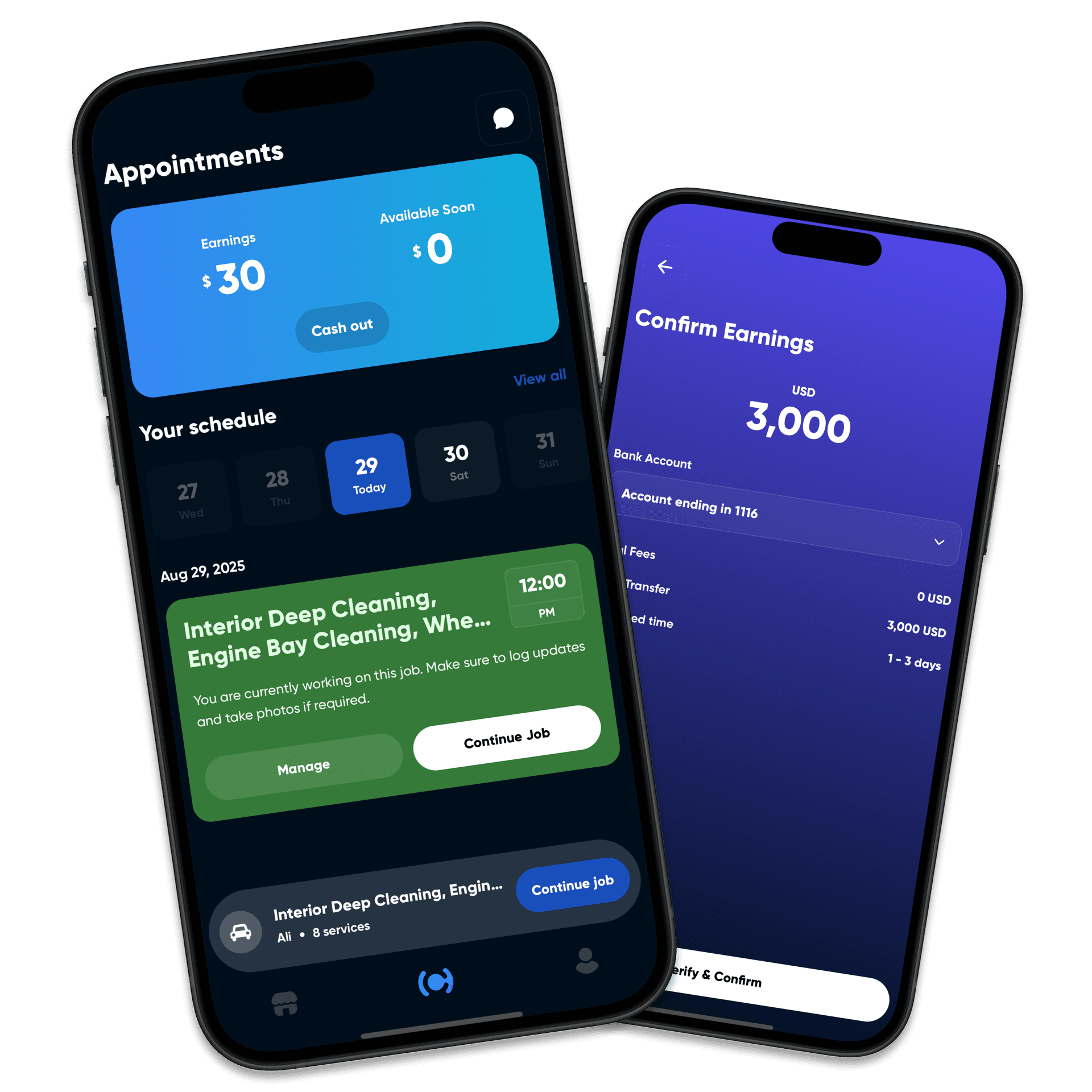
CurbCar represents a modern detailing business model built specifically for professional detailers. It combines marketplace visibility with tools that support long-term business growth. Detailers on CurbCar benefit from customer booking requests, schedule control, and escrow-based payments that protect against no-shows and payment disputes.
This model is particularly effective in 2026 as detailers prioritize payment security, predictable scheduling, and repeat customers. By approving appointments before they are confirmed and receiving payment through escrow, detailers maintain control over their workflow while building trust with customers. CurbCar also supports rebooking and customer retention, making it easier to turn one-time jobs into recurring revenue.
Final Thoughts
The best detailing business models for 2026 are built around recurring revenue, operational efficiency, and customer trust. Whether mobile, subscription-based, hybrid, niche-focused, or platform-driven, successful detailers will adapt to market demands and adopt systems that reduce risk and improve consistency. Choosing the right model—and executing it well—will determine which detailing businesses thrive in the years ahead.
CurbCar Team
Editor
Transform Your Mobile Detailing Business
Streamline your entire operation with the platform built specifically for mobile detailers. Get a free landing page designed to convert leads into customers when you join today.
No contracts. No catches. Simple.
Book your appointments. Pay in escrow. Cancel anytime.
